Bicycle accidents in Pennsylvania often cause serious injuries and high medical costs, leaving victims uncertain about liability. A driver might open a door without checking, run a red light at Fifth and Smithfield, or poor road conditions near the Three Rivers Heritage Trail can contribute.
Determining fault depends on each situation. At Pribanic & Pribanic, our bicycle accident lawyers in Pittsburgh, Pennsylvania, investigate every detail to identify who was negligent and pursue accountability for injured cyclists across Pittsburgh and Pennsylvania.
Key Takeaways: Understanding Liability in Pennsylvania Bicycle Accidents
- Drivers are liable when they violate traffic laws, fail to yield, or act carelessly around cyclists. Pennsylvania law requires motorists to give bicycles at least four feet of clearance when passing.
- Cyclists can recover compensation even if they weren’t wearing a helmet, as Pennsylvania doesn’t require adults to wear one by law.
- Government entities may be liable if poor road maintenance, missing signs, or dangerous conditions contributed to your accident.
- Product defects in bicycles or vehicle parts can shift liability to manufacturers when equipment failures cause crashes.
- Insurance companies often try to minimize payouts, so having a bicycle accident attorney handle your claim protects your rights.
- Property owners might be responsible if hazards on their land, such as unmarked construction zones or debris, caused your accident.
- Call a bicycle accident lawyer to review your case and identify all responsible parties before accepting settlement offers.
When Drivers Are Responsible for Bicycle Accidents
Most bicycle accidents in Pennsylvania happen because a driver wasn’t paying attention or broke traffic rules. Pennsylvania law treats bicycles as vehicles. That means cyclists have the same rights to the road as cars. Drivers must respect those rights.
Common scenarios include drivers turning right without checking for cyclists, opening car doors into bike lanes, or failing to yield at intersections. The four-foot passing law in Pennsylvania requires drivers to give cyclists plenty of room. The driver is typically liable when they don’t, and an accident happens.
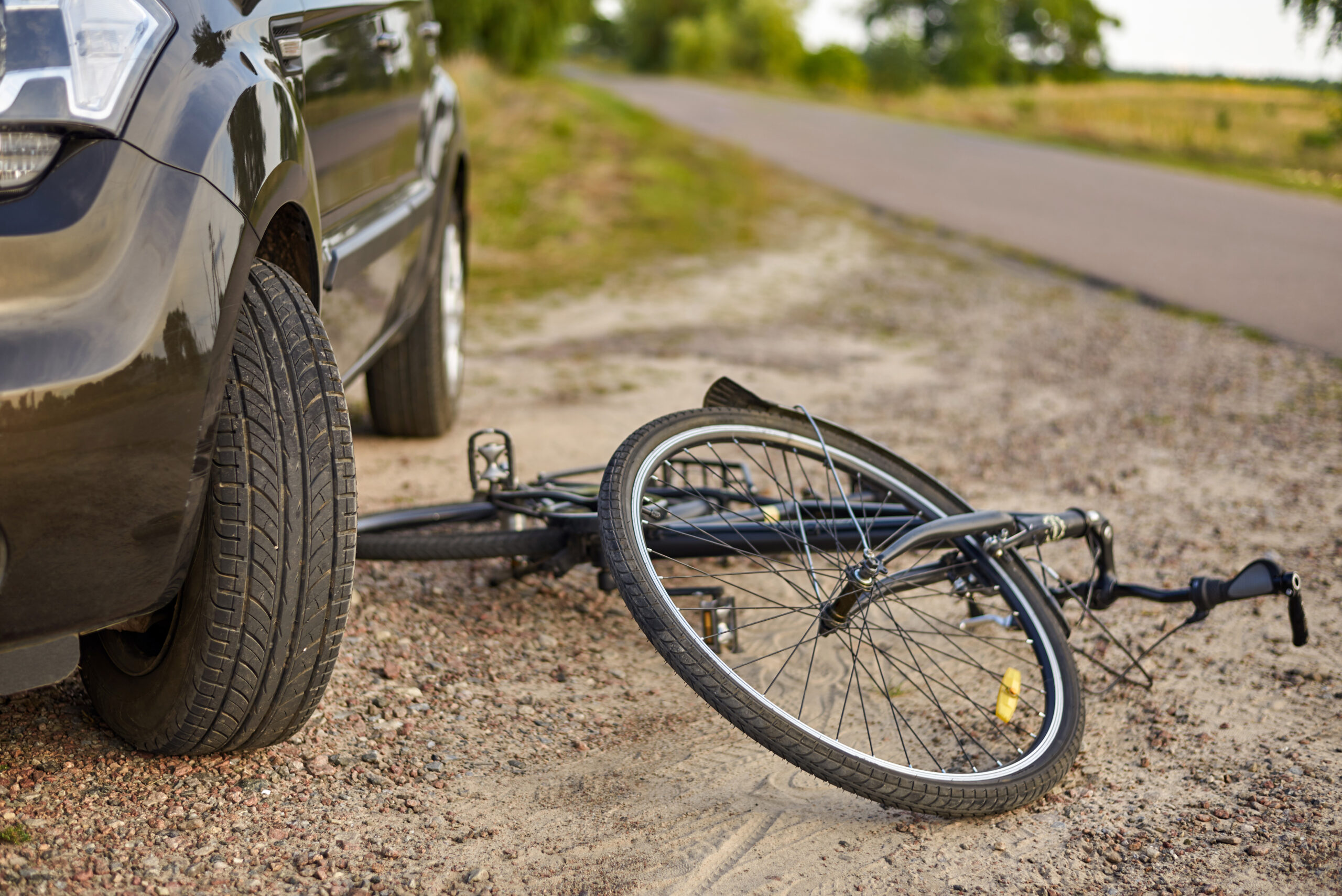
Pennsylvania’s four-foot passing law represents a critical safety requirement. Drivers must provide at least four feet of clearance when passing cyclists. This distance allows for minor steering corrections and prevents sideswipe collisions. Violations of this law demonstrate clear negligence.
Left-turn accidents frequently injure cyclists. Drivers turning left across traffic often fail to see approaching cyclists and misjudge their speed or distance. These failures to yield cause serious collisions, often at high speeds, as cyclists travel straight through intersections.
Right-hook accidents occur when drivers turn right directly into cyclists’ paths. The driver either doesn’t check mirrors or blind spots, or they misjudge the cyclist’s speed. These accidents often happen when both vehicles are proceeding straight, and then the driver turns suddenly right.
Dooring accidents happen when parked vehicle occupants open doors without checking for approaching cyclists. The cyclist has no time to react and crashes into the door or swerves into traffic. Pennsylvania law requires vehicle occupants to ensure that opening doors is safe before doing so.
Rear-end collisions injure cyclists when distracted or speeding drivers fail to notice slower-moving bicycles ahead. These crashes often cause serious injuries because cyclists have no protection from the force of the impact.
Drivers distracted by phones, navigation systems, or other factors cause many bicycle accidents. They simply don’t see cyclists until it’s too late. Pennsylvania’s texting ban addresses this problem, but enforcement remains challenging.
How Government Entities Can Be Held Accountable
Sometimes the road itself is the problem. Potholes, missing bike lane markings, broken traffic signals, or poorly designed intersections can cause serious accidents. When government agencies fail to maintain safe roads, they may be liable. Pennsylvania has specific rules for suing government entities. You typically have six months to file a notice of claim. Missing that deadline can end your case before it starts.
Judges in Allegheny County Common Pleas Court handle these cases regularly, and they take road maintenance obligations seriously. Our lawyers have handled cases against municipal and state entities throughout western Pennsylvania. Government liability requires proving the entity knew or should have known about the dangerous condition.
Prior complaints, repeated accidents at the same location, or obvious hazards demonstrate this knowledge. Pennsylvania law provides limited sovereign immunity protecting government entities from lawsuits. However, significant exceptions exist for dangerous road conditions. The key is proving the government had actual or constructive notice of the hazard. Bike lanes require proper maintenance just like regular travel lanes. Faded markings, debris accumulation, or surface defects in bike lanes can cause accidents.
Municipalities that provide bike infrastructure must maintain it safely. Drainage grates present serious hazards to cyclists. Older grate designs can trap bicycle wheels, causing sudden crashes. Governments must replace dangerous grates with bicycle-safe designs. Failure to do so can create liability when cyclists crash. Traffic signal timing sometimes fails to account for bicycle speeds.
Cyclists may enter intersections on green lights, but cannot clear them before signals change. This poor design creates dangerous situations and potential government liability. Construction zones must provide safe passage for cyclists. Missing signs warning of construction, inadequate barriers, or failure to maintain bicycle routes through work zones can all support liability claims against government entities.
Product Liability and Defective Equipment
Not every bicycle accident involves a careless driver. Defective parts like brakes, frames, tires, or other components can cause serious crashes even for careful riders. Manufacturers are responsible for ensuring their products are safe and are liable when defects lead to injuries.
Brake failures leave cyclists unable to stop, often causing intersection crashes or high-speed collisions. Frame defects, such as cracks or weld failures, can break suddenly during normal use, giving riders no warning. Tire defects, including tread separation or blowouts, create immediate loss of control at speed. Handlebar or stem failures compromise steering, and improperly designed quick-release wheels can detach during rides, causing crashes.
Child bicycle seats, trailers, and accessories must meet safety standards. Defective attachments or structural flaws that cause failures create manufacturer liability. Product liability claims often rely on expert testimony about design, manufacturing processes, and failure analysis.
Our firm works with engineers and product safety specialists to investigate equipment failures, document evidence, and build strong cases when defective bicycle components contribute to crashes.
Property Owner Responsibility for Hazardous Conditions
Property owners must keep their premises safe, including areas where cyclists travel, such as parking lots, private roads, or paths. Hazards like unmarked construction zones, debris, poor lighting, or blocked bike lanes can lead to accidents.
If a business in Oakland left equipment in a bike lane without warnings and you crashed, the owner can be liable. Pennsylvania premises liability law requires property owners to maintain areas they should reasonably expect cyclists to use.
Commercial properties must ensure parking lots, driveways, and access roads are safe. Potholes, uneven surfaces, and poor lighting that cause bicycle accidents create owner liability. Construction or maintenance affecting bike lanes or sidewalks must include proper warnings and safe passage. Materials, equipment, or debris spilling onto cycling routes without signs or barriers demonstrates negligence.
Private roads and publicly accessible paths require safe maintenance. Landscaping hazards, such as slippery grass clippings or overhanging branches, must be addressed promptly. Adequate lighting is critical for nighttime cycling. Event organizers using public roads or paths, including races or festivals, must plan for cyclist safety with proper signage and precautions.
Dealing with Insurance Companies After Your Accident
Insurance companies prioritize profits, not your recovery. After a bicycle accident, the at-fault driver’s insurer may minimize injuries or blame you to reduce payment. Never give a recorded statement before consulting a bicycle accident attorney.
At Pribanic & Pribanic, our lawyers handle all insurance communication to protect you from unfair tactics. Even your own insurer can complicate matters with uninsured or underinsured coverage. Legal representation prevents statements that can harm your claim.
Adjusters use tactics to weaken claims. They suggest cyclists don’t belong on roads, exaggerate mistakes, downplay driver negligence, and dispute injury severity. They often contact victims within hours, asking leading questions to minimize injuries or assign partial blame. They may request medical records to find pre-existing conditions.
Cyclists face unique challenges. Insurers sometimes claim accidents occurred because a cyclist rode legally on the road or failed to wear a helmet, despite Pennsylvania law. Quick settlement offers often fall short, made before victims understand long-term injury effects. Accepting releases can prevent future claims.
Early attorney involvement ensures claims are documented, injuries are accurately valued, and settlement demands reflect full damages. We handle all communications, preserving your rights and protecting you from insurer tactics.
Why Documentation Matters in Proving Liability
Building a strong bicycle accident case requires solid evidence. Police reports, witness statements, photos, and medical records help establish fault and support your claim. Surveillance cameras in Pittsburgh’s Cultural District or traffic cameras on major roads may capture the crash, but footage must be secured quickly. Our bicycle accident lawyers act fast to preserve this evidence.
Police reports document road conditions, vehicle and bicycle positions, witness statements, and officers’ assessments of fault, carrying weight in negotiations and court. Photos capture accident scenes, damage, road conditions, traffic signals, and visible injuries. Take them immediately or have someone do so.
Witness statements offer independent accounts of the crash, including driver behavior and post-accident observations. Medical records link injuries to the accident, so prompt treatment strengthens your case and limits insurer disputes.
Bicycle damage provides insight into impact force and collision dynamics, and clothing worn during the crash shows injury mechanisms. Preserve both. Electronic evidence from smartphones, fitness trackers, or bike computers can document speed, route, and riding behavior, refuting false claims about your actions.
The Role of Witnesses in Establishing Fault
Witnesses can significantly strengthen your case. Independent observers who saw a driver run a stop sign or cut you off can influence insurers and juries. If witnesses didn’t stop at the scene, our investigators can locate them. We have successfully found witnesses in Allegheny, Washington, and Westmoreland counties.
Witness testimony offers credibility that no other evidence can match. Parties involved in accidents have obvious interests, but independent witnesses provide objective accounts. Different witnesses notice different details: some see vehicle approaches, others witness the collision, and some observe post-crash behavior or immediate injuries. Each perspective contributes to a complete picture.
Pedestrians often make excellent witnesses because they observe without vehicle distractions. Cyclists also provide valuable testimony and understanding of road hazards and normal cycling behavior. Business owners and employees near accident locations may witness crashes or near-misses, showing patterns of driver negligence. Passengers in vehicles involved in accidents can provide accounts of driver behavior leading up to a crash.
Locating witnesses requires investigative work. Our team canvasses accident areas, contacts nearby businesses, reviews police reports, and uses other techniques to ensure all observers who saw the crash are identified.
Get Help from a Pennsylvania Bicycle Accident Attorney
Bicycle accidents cause serious injuries that deserve serious compensation. Figuring out liability requires investigation, legal knowledge, and persistence. At Pribanic & Pribanic, we’ve recovered significant compensation for cyclists injured throughout Pennsylvania. Our attorneys understand Pennsylvania traffic laws, insurance practices, and how to build winning cases.

Don’t let insurance companies take advantage of you during a difficult time. Call our office at (412)672-5444 or complete our online form. Let our personal injury lawyers in Pittsburgh, Pennsylvania, fight for the compensation you deserve.
FAQs About Bicycle Accident Liability in Pennsylvania
Who pays my medical bills after a bicycle accident in Pennsylvania?
The at-fault driver’s insurance should cover your medical bills. If they’re uninsured, your own uninsured motorist coverage may apply. A bicycle accident attorney can help identify all available coverage.
Can I still recover compensation if I wasn’t wearing a helmet?
Yes. Pennsylvania doesn’t require adult cyclists to wear helmets. Insurers may use this against you, but the lack of a helmet usually doesn’t stop you from recovering compensation for your injuries.
How long do I have to file a bicycle accident claim in Pennsylvania?
Pennsylvania’s statute of limitations allows two years from the accident date to file a personal injury lawsuit. Claims against government entities require notice within six months. Contact a lawyer promptly to protect your rights.
What if multiple parties contributed to my bicycle accident?
Multiple parties can share liability. Your lawyer will investigate all potential defendants, including drivers, manufacturers, property owners, and government agencies. It ensures you pursue compensation from everyone responsible for your injuries.
Do I need a lawyer for a bicycle accident claim?
Insurance companies have lawyers protecting their interests. You should, too. A bicycle accident lawyer handles the legal complexities, negotiates with insurance companies, and fights for full compensation while you focus on recovery.