
When your child has cerebral palsy, and you are left wondering whether the injury could have been prevented, you deserve a careful review of the pregnancy, labor, delivery, and newborn records. A Pittsburgh cerebral palsy lawyer at Pribanic & Pribanic can investigate whether negligent medical care caused or worsened the brain injury and pursue compensation for your child’s lifelong needs.
Cerebral palsy does not automatically mean malpractice occurred. Many cases have causes unrelated to negligence. A viable claim requires medical evidence connecting a preventable error, such as a failure to respond to fetal distress or treat a dangerous newborn condition, to the child’s neurological injury.
Pribanic & Pribanic has represented injured people since 1982 and brings more than 100 years of combined experience to complex birth-injury litigation. Consultations are free, and there are no fees unless you win.
Call (412) 672-5444 or contact Pribanic & Pribanic online for a confidential review of your child’s medical history.
Table of Content
- Can Cerebral Palsy Be Caused by Medical Malpractice?
- What Medical Errors Can Lead to a Cerebral Palsy Claim?
- How Do Attorneys Prove Oxygen Deprivation or HIE?
- Why Do Hospitals and Insurers Dispute Cerebral Palsy Claims?
- What Types of Cerebral Palsy May Be Involved?
- What Future Needs Should a Cerebral Palsy Claim Address?
- How Can a Pittsburgh Cerebral Palsy Lawyer Help My Family?
- What Compensation May Be Available for Cerebral Palsy?
- Who May Be Responsible for a Cerebral Palsy Birth Injury?
- What Happens After We Contact a Cerebral Palsy Lawyer?
- How Long Do We Have to File a Cerebral Palsy Lawsuit in Pennsylvania?
- Why Choose Pribanic & Pribanic for a Cerebral Palsy Claim?
- Frequently Asked Questions About Cerebral Palsy Claims
- Speak With a Pittsburgh Cerebral Palsy Lawyer
Can Cerebral Palsy Be Caused by Medical Malpractice?
Yes, cerebral palsy can be caused by medical malpractice when a preventable failure during pregnancy, labor, delivery, or newborn care results in damage to the developing brain. The diagnosis alone does not prove negligence, so the claim must establish the medical cause and show how timely care would probably have prevented or reduced the injury.
The Centers for Disease Control and Prevention explains that cerebral palsy results from abnormal brain development or damage to the developing brain. Birth complications involving the placenta, uterus, or umbilical cord can disrupt oxygen supply, but many other genetic, prenatal, infectious, and developmental factors can also be involved.
A lawyer must distinguish a known complication from birth injuries caused by negligence. That work usually involves obstetric, neonatal, neurological, imaging, and placental evidence.

What Medical Errors Can Lead to a Cerebral Palsy Claim?
A cerebral palsy claim may arise when providers miss or mishandle a condition that threatens fetal or newborn brain function. The key issue is not whether a complication occurred, but whether reasonable care could have prevented the resulting harm.
- Failure to recognize and respond to persistent signs of fetal distress
- Unreasonable delay in an emergency delivery when the medical evidence called for intervention
- Failure to diagnose or treat placental abruption, uterine rupture, cord problems, or maternal infection
- Improper management of an assisted delivery or shoulder dystocia
- Failure to treat severe newborn jaundice, low blood sugar, infection, seizures, or respiratory distress
- Delay in evaluating a newborn for hypoxic-ischemic encephalopathy and time-sensitive treatment
These events do not prove negligence on their own. Qualified review must consider fetal-monitoring patterns, maternal vital signs, laboratory results, medications, delivery timing, neonatal examinations, cord gases, imaging, and the child’s later development.
How Do Attorneys Prove Oxygen Deprivation or HIE?
Attorneys prove an oxygen-deprivation or hypoxic-ischemic encephalopathy claim by reconstructing when the injury likely occurred and whether the providers responded reasonably. No single monitor strip or laboratory value answers every causation question.
- Prenatal and labor records, including fetal-heart-rate tracings
- Operative reports and the timing of decisions and delivery
- Umbilical-cord blood gases, Apgar documentation, and resuscitation records
- Neonatal intensive-care notes, seizure records, imaging, and neurological examinations
- Placental pathology and maternal-infection evidence
- Developmental evaluations, therapy records, and genetic or metabolic testing when relevant
The defense may argue that the brain injury began before labor or resulted from a genetic or developmental condition. The family’s case must address those alternatives with evidence rather than assume that a difficult delivery explains the diagnosis.
Why Do Hospitals and Insurers Dispute Cerebral Palsy Claims?
Hospitals and insurers often dispute when the brain injury occurred, whether any provider could have prevented it, and which future needs result from cerebral palsy. Because many medical and developmental factors can contribute, causation is usually the central issue.
The defense may rely on prenatal imaging, infection, prematurity, genetic findings, placental conditions, or the argument that fetal-monitoring changes did not require earlier intervention. It may also challenge whether a different delivery time or newborn treatment would have changed the neurological outcome.
A strong claim does not ignore those alternatives. Qualified reviewers compare them with the labor record, physiological evidence, imaging, developmental history, and accepted medical principles. The damages evidence should likewise separate needs associated with the preventable injury from unrelated conditions.
Insurers may also use an isolated milestone, school success, or a good day in therapy to minimize lifelong limitations. The full record should show both the child’s abilities and the assistance, effort, treatment, equipment, or accommodations required to achieve them.
What Types of Cerebral Palsy May Be Involved?
Cerebral palsy can affect movement, muscle tone, posture, balance, and coordination in different ways. The medical classification helps describe function and treatment needs, but it does not establish when the brain injury occurred or whether malpractice caused it.
- Spastic cerebral palsy, involving stiffness and increased muscle tone
- Dyskinetic cerebral palsy, involving involuntary or changing movements
- Ataxic cerebral palsy, involving balance and coordination
- Mixed cerebral palsy, involving features of more than one movement pattern
- Patterns described by the limbs involved, such as hemiplegia, diplegia, or quadriplegia
A child may also experience seizures, feeding challenges, communication differences, orthopedic complications, vision or hearing concerns, or learning and developmental needs. The claim should use the child’s actual diagnoses and function rather than assume that every person with cerebral palsy has the same limitations.
What Future Needs Should a Cerebral Palsy Claim Address?
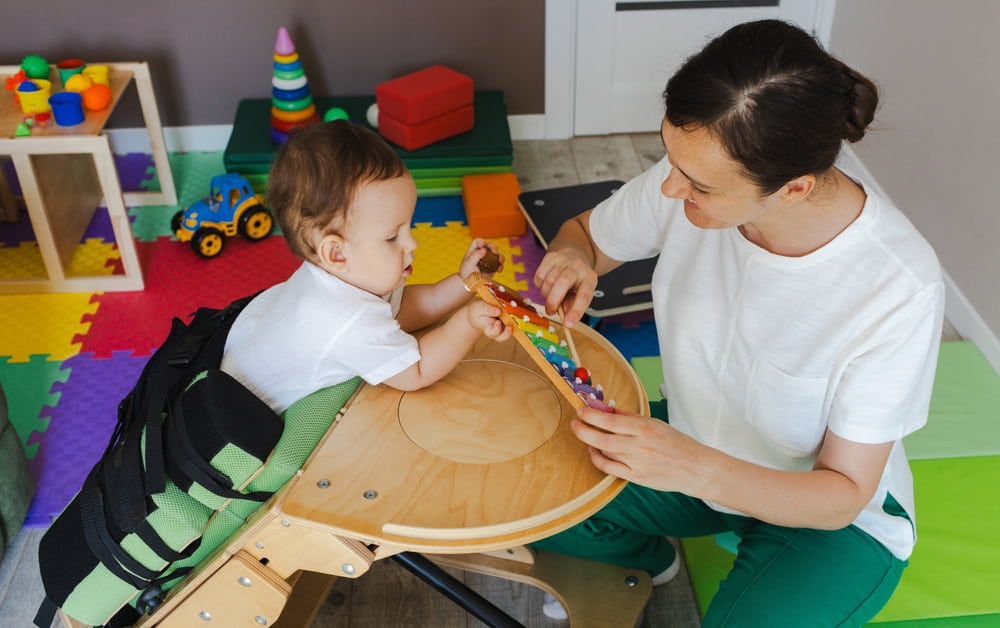
A cerebral palsy claim should address the child’s supported lifetime needs, not only the cost of early therapy. The plan must reflect the child’s specific motor function, communication, cognition, feeding, seizure history, education, independence, and family circumstances.
- Physical, occupational, speech, feeding, and behavioral therapies
- Neurology, orthopedics, rehabilitation medicine, surgery, and medication
- Mobility devices, communication technology, orthotics, and replacement schedules
- Accessible transportation and changes to the family home
- Special education, vocational support, and transition planning
- Personal care, respite services, supported living, or supervision when medically supported
Life-care planners, treating professionals, vocational specialists, and economists may be needed to translate medical recommendations into a supported long-term cost picture. The analysis should be detailed enough to guide the claim without assuming that every possible service will be required.
Children with cerebral palsy may also have other delivery-related injuries. Each diagnosis should be evaluated separately and then considered as part of the child’s overall function.
Your child’s claim should reflect the care, equipment, education, and support the future may require. Call (412) 672-5444 for a free consultation.
How Can a Pittsburgh Cerebral Palsy Lawyer Help My Family?
A Pittsburgh cerebral palsy lawyer can secure the complete record, obtain qualified medical review, preserve electronic evidence, and determine whether the facts support a birth-injury lawsuit. Counsel can also develop a lifetime-needs analysis while protecting filing deadlines.
Review the complete timeline. The team examines prenatal care, labor, delivery, newborn treatment, diagnosis, and developmental history.
Identify the preventable failure. Qualified professionals assess what reasonable providers should have done and when.
Connect the failure to the injury. Medical evidence must address timing, competing causes, and the effect of delayed or improper care.
Document lifelong loss. The claim is built around supported treatment, care, equipment, education, income, and quality-of-life effects.
Pursue resolution. The attorneys negotiate from a developed record and litigate when the defense will not respond reasonably.
What Compensation May Be Available for Cerebral Palsy?
Compensation may cover the additional financial and personal harm caused by a preventable birth injury. The amount depends on the child’s actual needs, the strength of the medical evidence, available defendants and coverage, and Pennsylvania law.
- Past and future medical treatment and rehabilitation
- Assistive technology, mobility equipment, and accessible housing or transportation
- Personal care and household support
- Special education and vocational services
- Future loss of earning capacity when supported
- Pain, loss of function, and diminished enjoyment of life
No online settlement figure can value an individual child’s case. A reliable demand uses the child’s prognosis and specific care plan. Past outcomes do not guarantee future results.
Who May Be Responsible for a Cerebral Palsy Birth Injury?
Responsibility may involve an obstetrician, hospital, nurse, midwife, neonatal team, physician group, laboratory, or another provider whose preventable failure contributed to the brain injury. The correct defendants depend on the timing and cause of the injury, not simply on who attended the delivery.
Hospitals may also be responsible for their own systems, including staffing, escalation procedures, fetal-monitoring practices, access to an operating room, or communication of critical results. The investigation examines the role of each person and organization without assuming that every provider made the same decision.
Separate insurance arrangements and institutional records may apply to different defendants. Early identification helps preserve electronic fetal-monitoring data, audit trails, policies, schedules, and communications that may not appear in the standard chart.

What Happens After We Contact a Cerebral Palsy Lawyer?
The first step is a confidential consultation about the pregnancy, delivery, newborn course, diagnosis, and current needs. If the facts warrant investigation, the firm requests the complete records and arranges review by qualified professionals in the relevant fields.
- Medical review can take time because the records are extensive and causation must be evaluated carefully. The attorneys may need fetal-monitoring files, imaging, placental materials, electronic data, and opinions from more than one discipline before deciding whether the evidence supports a lawsuit.
- If a claim proceeds, the legal team files the required pleadings and certificate of merit, obtains evidence through discovery, takes testimony, and develops the future-care case. Negotiation or mediation may occur, but preparation continues toward trial unless the family accepts a supported resolution.
- Pennsylvania Rule 1042.3 generally requires a certificate of merit in a professional-liability action. The filing confirms that an appropriately licensed professional has supplied the required written statement or that another permitted basis applies. It does not replace the broader expert work needed to prove causation and lifelong damages.
The family remains involved in major decisions and continues directing the child’s medical care. The attorney’s role is to explain the legal choices, manage the litigation, and present the supported effect of the injury without promising an outcome.
How Long Do We Have to File a Cerebral Palsy Lawsuit in Pennsylvania?
Pennsylvania generally applies a two-year limit to professional-negligence claims, with fact-specific rules governing when the period begins. 42 Pa.C.S. Section 5533 generally excludes an unemancipated child’s minority from the filing calculation, but a parent’s related claims and other deadlines may be different.
Families should seek advice promptly rather than rely on tolling. Early review protects fetal-monitoring data, imaging, pathology, witness memories, and related evidence. Learn more about your right to file a birth injury claim in PA.
Why Choose Pribanic & Pribanic for a Cerebral Palsy Claim?
Pribanic & Pribanic combines long-standing Pennsylvania litigation experience with the medical and future-care development required in a cerebral palsy case. The firm has represented injured people since 1982 and offers free consultations on a contingency-fee basis.
- More than 100 years of combined legal experience
- A Pittsburgh office at 513 Court Place
- A record-based process that addresses medical causation and supported lifetime needs
- Best Lawyers 2027 recognition for Ernest, Victor, and Jeffrey Pribanic
When powerful insurance companies push back, we push harder. The attorneys prepare each supported claim without guaranteeing a particular result.
Frequently Asked Questions About Cerebral Palsy Claims
Does every cerebral palsy diagnosis mean malpractice occurred?
No. Cerebral palsy can result from genetic, developmental, prenatal, infectious, birth-related, or postnatal causes. A malpractice claim requires evidence that a provider failed to meet the applicable standard of care and that the failure caused or worsened the brain injury.
What if the hospital says the injury happened before labor?
That is a medical causation question, not a final legal answer. Qualified reviewers can examine prenatal records, fetal monitoring, placental evidence, cord gases, newborn findings, imaging, and alternative causes to assess when the injury most likely occurred.
Should we wait until our child’s prognosis is certain?
Do not wait to ask about deadlines. Prognosis may develop over time, but legal and medical evidence can disappear. An attorney can protect the claim while treating professionals continue to evaluate function and future needs.
Can we afford a cerebral palsy lawyer?
Pribanic & Pribanic offers free consultations and handles accepted cerebral palsy cases on a contingency-fee basis. No fees unless you win. The written agreement explains attorney fees and case expenses before you decide.
Will the case settle or go to trial?
Either is possible. A family can consider settlement after the medical-causation and future-needs evidence is developed. The client decides whether to accept an offer after discussing the risks, timing, and alternatives with counsel.
Speak With a Pittsburgh Cerebral Palsy Lawyer

You do not need to interpret fetal-monitoring strips or neonatal records before asking for help. Call Pribanic & Pribanic at (412) 672-5444 or send a confidential message for a free consultation. No fees unless you win. The Right Lawyer Changes Everything.