Childbirth is supposed to be one of the happiest days of your life, and when a delivery goes wrong, the grief and worry can be hard to put into words. A C-section errors lawyer at Pribanic & Pribanic helps Pittsburgh-area families find out whether a cesarean that came too late, never happened, or was performed carelessly harmed a baby or a mother. We investigate what happened in the delivery room and pursue accountability so your family can focus on care and healing.
We offer a free, confidential consultation, and there are no fees unless you win. Contact us whenever you are ready to talk.
Table of contents
- Two Different C-Section Claims: Delivered Too Late or Never Performed
- What Is the Decision-to-Delivery Interval in an Emergency C-Section?
- How Should the Medical Team Respond to a Worrisome Fetal Heart Tracing?
- Birth Injuries Linked to a Delayed or Missed C-Section
- Can a Mother File a Claim for Injuries From a C-Section?
- What Pennsylvania Requires Before a Birth Injury Case Can Proceed
- How Long Does a Family Have to File a C-Section Injury Claim in Pennsylvania?
- Why Families Trust Pribanic & Pribanic With Birth Injury Cases
- FAQs: C-Section Errors Lawyer
- Talk With a Pittsburgh C-Section Errors Lawyer
Two Different C-Section Claims: Delivered Too Late or Never Performed
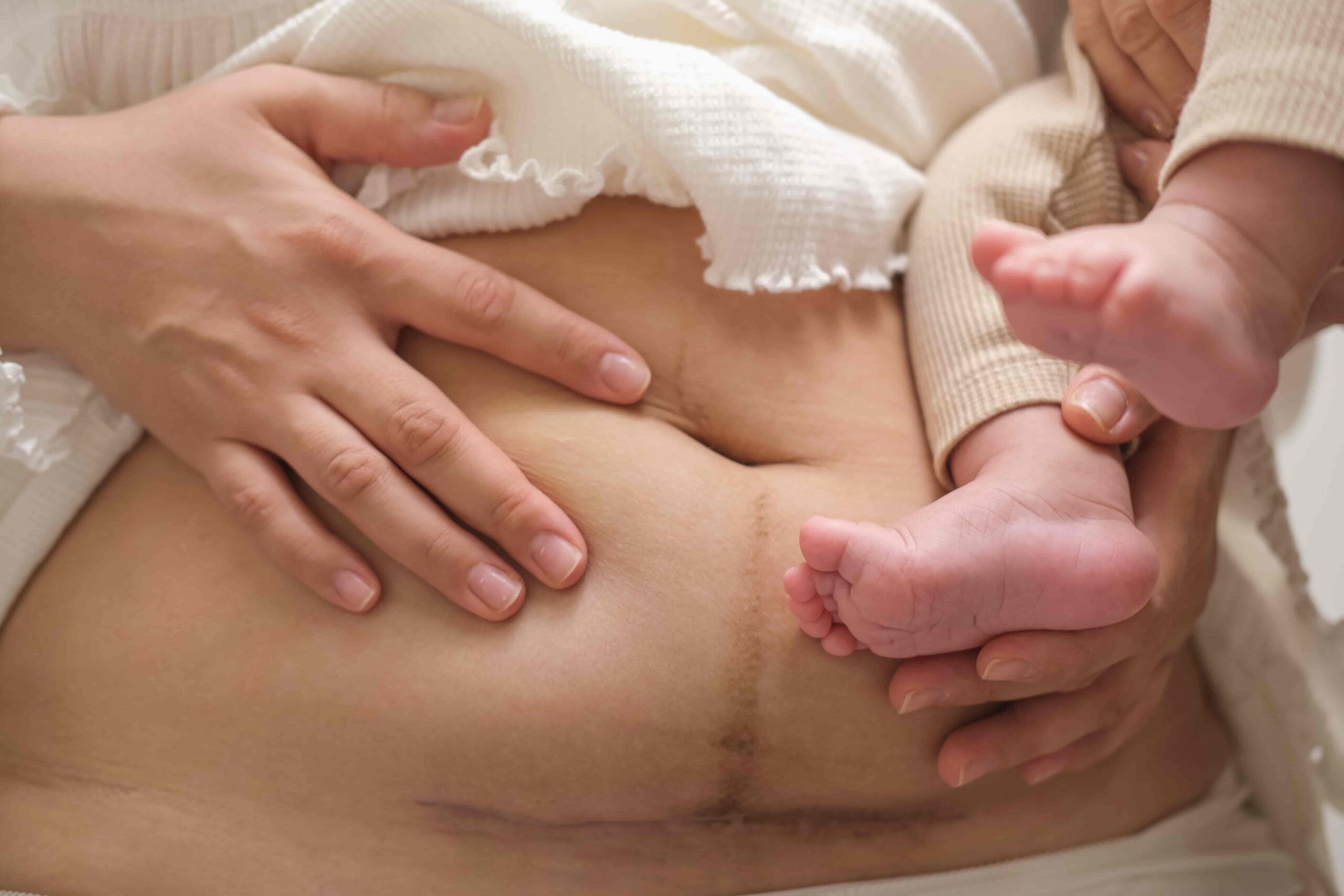
Most C-section malpractice cases fall into one of two categories: a cesarean that was performed too late, or a cesarean that should have happened and never did. The difference shapes the entire case, because each one asks a different question about what the medical team knew and when.
Here is how the two claims compare:
| Issue | Delayed C-section | C-section never performed |
|---|---|---|
| What went wrong | The team decided to operate, but delivery took too long | The team kept pursuing a vaginal delivery despite warning signs |
| Central question | Was the time from decision to delivery reasonable? | When should a careful provider have called for a cesarean? |
| Key evidence | Timestamped nursing notes, anesthesia records, operating room logs | Fetal heart tracings, labor progress notes, ultrasound findings |
| Common defense | The delay was unavoidable or did not change the outcome | Continuing labor was a reasonable choice at the time |
Some cases involve both: a slow decision followed by a slow response. We review the entire labor, not just the final hour.
Warning Signs That Can Call for a Cesarean
Providers weigh a cesarean when labor stops progressing, the baby is breech, the placenta separates early, the umbilical cord prolapses, or the baby is very large. A prior cesarean also raises the stakes of a trial of labor, because the uterine scar can rupture. When one of these risks is documented and the plan never changes, that gap often becomes the center of a never-performed claim.
What Is the Decision-to-Delivery Interval in an Emergency C-Section?
The decision-to-delivery interval is the time between the moment a provider decides an emergency cesarean is needed and the moment the baby is born. Obstetric guidelines have long said hospitals should be able to begin an emergency cesarean within 30 minutes of that decision.
That 30-minute figure is a readiness benchmark for hospitals, and physicians still debate whether it works as a strict rule in every case. What usually matters most is whether the delay was reasonable given what the fetal monitor showed, and whether faster delivery would likely have prevented the injury.
How We Rebuild the Timeline From the Medical Record
Labor and delivery records carry timestamps from many sources, and they do not always agree. We collect them and line them up minute by minute:
- When the fetal heart tracing first showed a concerning pattern
- When the nurse notified the physician or midwife, and how they responded
- When the decision to perform a cesarean was documented
- When anesthesia was called and when the mother reached the operating room
- The time of incision and the time of delivery
- The baby's condition at birth, including Apgar scores and umbilical cord blood gas results
Gaps in this sequence, or notes written long after the fact, often tell a story the official summary leaves out.
How Should the Medical Team Respond to a Worrisome Fetal Heart Tracing?
Providers are expected to recognize warning signs on a fetal heart rate tracing and act promptly. That can include repositioning the mother, giving fluids or oxygen, stopping labor-stimulating medication, and moving toward delivery when the pattern does not improve.
Labor units commonly use a three-category system to read these tracings. Category I is normal, while Categories II and III call for closer attention.
Category II Tracings
Category II covers patterns that are not clearly normal or clearly abnormal. They call for evaluation, continued monitoring, and reassessment in light of everything else happening during labor.
Category III Tracings
Category III patterns are abnormal and signal a higher risk that the baby is not getting enough oxygen. They require prompt evaluation and action, and if the pattern does not resolve, delivery is often the next step.
When a Missed Strip Becomes the Breach
A tracing nobody reviewed, a nurse's concern that never reached the physician, or a Category III pattern left without a response can each be a departure from the standard of care. Our job is to show what a careful team would have done and how the outcome would likely have been different.
Birth Injuries Linked to a Delayed or Missed C-Section

When delivery is delayed while a baby is in distress, the lack of oxygen can cause permanent brain injury, nerve damage, or death. The specific injury guides which medical specialists our Pittsburgh birth injury attorney consults and how the connection to the delay is proven.
Injuries we see connected to delayed cesarean delivery include:
- Hypoxic-ischemic encephalopathy (HIE): brain injury from reduced oxygen and blood flow, sometimes treated with cooling therapy shortly after birth.
- Cerebral palsy: a lifelong condition affecting movement and muscle tone that can follow oxygen deprivation around the time of birth.
- Shoulder dystocia and brachial plexus injury: when a large baby or other risk factors made a cesarean the safer choice, a difficult vaginal delivery can stretch or tear the nerves of the shoulder and arm.
- Infant death: a loss no family should face, which can support wrongful death and survival claims.
Not every injury is caused by a delay, and the defense will often point to other causes. Careful review of the tracings, cord gases, placenta pathology, and imaging is how we test the connection before a family decides to move forward.
Can a Mother File a Claim for Injuries From a C-Section?
Yes. A cesarean is major abdominal surgery, and a mother can bring her own malpractice claim when a surgical error or poor follow-up care causes harm. These claims are often overlooked because attention naturally centers on the baby.
Injuries During the Operation
Surgical errors can include cutting or tearing the bladder, bowel, or ureters, bleeding that was not controlled quickly enough, and sponges or instruments left inside the body. Anesthesia errors during the procedure can also cause serious harm.
Problems After Surgery
After delivery, providers are expected to watch for infection, internal bleeding, and blood clots. A fever, worsening pain, or signs of hemorrhage that are dismissed or treated late can turn a manageable complication into a lasting injury.
If your own recovery did not go the way you were told it would, your concerns are worth a careful look.
What Pennsylvania Requires Before a Birth Injury Case Can Proceed
Pennsylvania requires a certificate of merit in every medical malpractice case, filed with the complaint or within 60 days after it. The certificate confirms that an appropriate licensed professional reviewed the care and found a reasonable probability that it fell below accepted standards and caused harm.
The Certificate of Merit
The certificate of merit rule requires a separate certificate for each licensed professional named, such as an obstetrician, a midwife, or a nurse. A court can extend the 60-day deadline for good cause, which matters when records arrive slowly.
The reviewer's qualifications come from the Medical Care Availability and Reduction of Error (MCARE) Act. The MCARE Act generally expects a reviewing physician to practice in the same or a similar specialty as the provider being reviewed.
Where the Case Can Be Filed
Since January 1, 2023, Pennsylvania no longer requires medical malpractice lawsuits to be filed only in the county where the care took place. Venue now follows the general rules for other civil cases, which can give a family more than one possible county.
How Long Does a Family Have to File a C-Section Injury Claim in Pennsylvania?

A child injured at birth generally has until two years after turning 18 to file a malpractice claim in Pennsylvania. A mother's own injury claim usually must be filed within two years, and a wrongful death claim generally within two years of the death.
The Child's Claim
Pennsylvania law stops the clock on a child's own claim until age 18. That surprises many families, and it means a birth injury that becomes clearer as a child grows can still be pursued years later.
The Mother's Claim and Related Claims
A mother's claim follows the two-year limit for personal injury, subject to a narrow discovery rule when an injury or its cause was not reasonably knowable. Claims for medical bills paid by parents and claims tied to an infant's death can run on shorter timelines, so we encourage families to call early.
Why Families Trust Pribanic & Pribanic With Birth Injury Cases
Birth injury cases call for patience, medical fluency, and a team willing to stand up to hospitals and their insurers. Pribanic & Pribanic has represented Pennsylvania families since the firm was established in 1982.
- Medical injury focus: most of our practice involves medical injury cases, including obstetric claims.
- Experience at trial: our attorneys bring 100+ years combined experience and prepare cases to go before a jury when needed.
- The right reviewers: we work with obstetricians, neonatologists, pediatric neurologists, and life care planners.
- Recognized attorneys: three of our attorneys are recognized in Best Lawyers 2027.
- No fees unless you win: your first conversation is free and confidential.
Families across Allegheny County can meet with us at our downtown Pittsburgh office. We handle these cases with care for what your family is living through, and we explain each step in plain language. Contact us to schedule your free consultation.
FAQs: C-Section Errors Lawyer
These answers address questions families often ask us after a difficult cesarean delivery.
Can I sue if I asked for a C-section and my doctor said no?
Possibly. A patient's request alone does not prove malpractice, but if the medical situation called for a cesarean and the provider refused or delayed, that refusal can be part of a claim. Records of your request, along with fetal monitoring and labor notes, help show what the team knew at the time.
Is an unnecessary C-section grounds for a malpractice claim?
It can be. In Pennsylvania, a surgeon generally must obtain informed consent before surgery by explaining the risks and alternatives. A claim may exist if a cesarean was performed without a proper medical reason or without informed consent, and the mother or baby was harmed as a result.
Can the hospital be responsible, not just the obstetrician?
Yes. A Pennsylvania hospital can be responsible for its own employees, such as labor and delivery nurses, and in some situations for physicians who appear to be acting on its behalf. Hospitals can also face claims tied to their own policies, staffing, and operating room availability.
What records should I request after a birth injury?
Ask for the complete labor and delivery chart, the full electronic fetal monitoring strips, anesthesia and operating room records, neonatal intensive care unit (NICU) records, and placenta pathology. Monitoring strips are often stored separately, so a general records request can miss them.
How much does it cost to hire a C-section errors lawyer?
At Pribanic & Pribanic, there are no fees unless you win. We offer a free consultation and are paid only from a recovery. Birth injury cases often need costly medical reviews, and we advance those costs while the case moves forward.
What if my baby seemed healthy at first and problems appeared later?
That is common. Some birth injuries, including cerebral palsy, may not be diagnosed until a child misses developmental milestones months or years later. A later diagnosis does not rule out a claim, and early records such as cord blood gases and newborn brain imaging can still connect the injury to the delivery.
Talk With a Pittsburgh C-Section Errors Lawyer

You may still be sorting through what happened in the delivery room, and you do not need every answer before you reach out. Pribanic & Pribanic can review the records, explain what they show, and tell you honestly whether a claim makes sense. Every case turns on its own facts, and no lawyer can promise an outcome.
Contact our Pittsburgh office for a free, confidential consultation.