Proving fault in a car accident in Pittsburgh comes down to assembling a body of evidence that makes it more likely than not that the other driver caused the crash.
That legal standard, known as preponderance of evidence, is far less demanding than criminal proof beyond a reasonable doubt, but it still requires real documentation.
A personal injury attorney handling car accident cases can help identify and preserve the evidence that matters most before it disappears. Pennsylvania follows a modified comparative negligence system with a 51% bar rule.
That means you can still recover compensation even if you were partially at fault, as long as you were no more than 50% responsible. Insurance companies understand this rule well, and they use it aggressively.
Shifting even a portion of the blame onto you reduces what they owe.
Evidence is not just about proving the other driver was negligent. It is about limiting the amount of fault assigned to you.
Every piece of documentation you preserve makes that harder for an insurer to manipulate.
Why Does This Matter?
- Pennsylvania's modified comparative negligence rule means evidence gathering directly affects how much compensation you can recover, not just whether you can recover at all.
- A police report is useful but not conclusive. Officers document the scene after the fact and rarely witness the crash itself.
- The first hours and days after an accident are the most critical window for preserving evidence that insurers and defense attorneys cannot later dispute or explain away.
Why Insurance Companies Fight So Hard Over Fault
Before getting into specific evidence, it helps to understand the financial incentive behind how the other driver's insurer responds to your claim.
Every percentage point of fault they can shift onto you reduces their payout proportionally. If your damages total $200,000 and they convince an adjuster, arbitrator, or jury that you were 30% at fault, they pay $140,000 instead of $200,000.
If they push your share of fault above 50%, they pay nothing at all under Pennsylvania law. This is not speculation about bad faith. It is the predictable result of a system where insurers profit by minimizing payouts.
Their adjusters are trained to look for anything that supports shared or exclusive blame on your part:
- Were you speeding, even slightly?
- Did you fail to use a turn signal?
- Did you have an opportunity to avoid the collision?
- Was there any delay before you sought medical treatment?
Strong evidence does not just tell your story. It closes the doors that insurers use to tell a different one.
The Evidence That Carries the Most Weight
Physical and Scene Evidence
The crash scene contains information that exists only briefly. Skid marks fade. Debris gets cleared. Traffic cameras overwrite footage. Weather and road conditions change.
What is documented in the first hours often determines the factual foundation of the entire case.
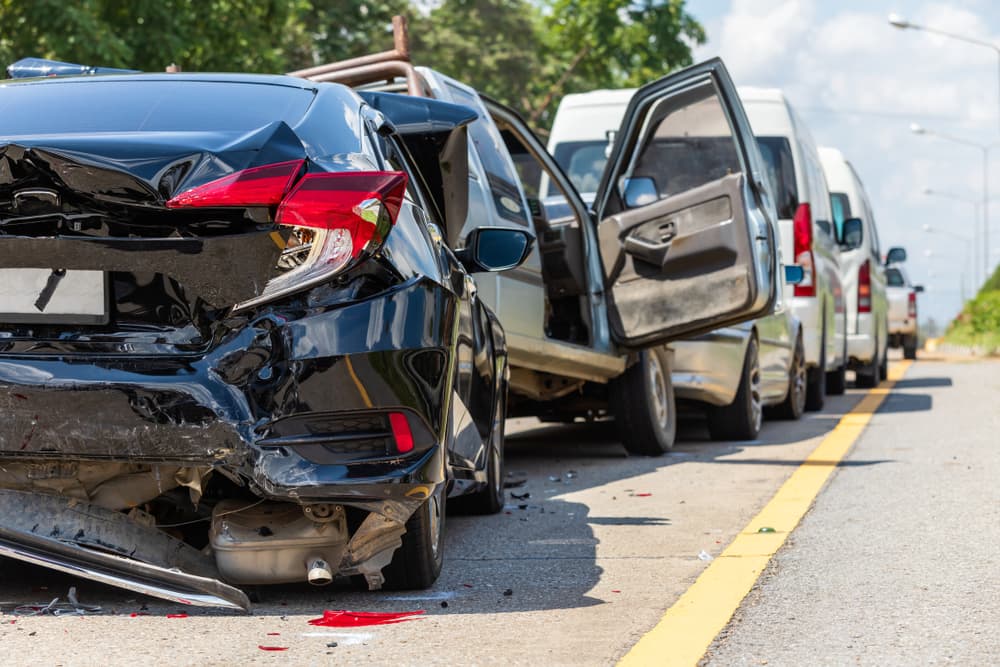
- Photographs of vehicle damage: Capture damage from multiple angles on all vehicles involved. The location and severity of damage can corroborate or contradict accounts of how the crash happened.
- Scene conditions: Road surface, visibility, weather, lighting, and the presence or absence of traffic control devices all bear on how the accident occurred and whether either driver had warning.
- Skid marks and debris patterns: These are among the most transient forms of evidence. Tire marks can indicate braking distance and vehicle speed. Debris scatter can suggest point of impact.
- Traffic signal and signage documentation: Photograph every stop sign, traffic light, yield sign, and lane marking relevant to the intersection or roadway where the crash occurred.
- Your visible injuries: Photograph injuries at the scene if possible and again in the days that follow as bruising, swelling, and soft tissue injuries often become more visible over time.
The Police Report
A police report is one of the first things insurance companies review, and it carries real weight in early settlement discussions. But its limitations are just as important to understand as its value.
- Officers document, they rarely witness: Unless a patrol car was present at the moment of impact, the responding officer is working from physical evidence and the statements of people who each have a reason to minimize their own fault.
- Fault notations are not binding: An officer's opinion about who caused the crash is not a legal determination. It can be challenged with stronger evidence.
- Errors happen: Incorrect vehicle descriptions, wrong witness information, and factual mistakes in police reports are not uncommon. Reviewing your copy carefully matters.
- Citations are meaningful: If the other driver received a traffic citation at the scene, that is significant evidence of fault even though it is not the final word.
Obtain a copy of the police report as soon as it is available and review it for accuracy. Errors can often be corrected, but the window to do so is limited.
Witness Statements
Neutral third-party witnesses are among the most credible sources of evidence in a disputed liability case. A bystander with no stake in the outcome who watched the crash happen carries far more weight than either driver's account.
- Get contact information immediately: Names, phone numbers, and if possible email addresses. Witnesses move on quickly and may be difficult to locate later.
- Do not coach them: Ask what they saw and let them describe it. Their credibility depends on the independence of their account.
- Passengers have value too: They are not neutral, but they are witnesses. Their observations about speed, road conditions, and driver behavior are part of the record.
- Nearby businesses may have seen it too: Employees at storefronts, gas stations, or restaurants near the scene sometimes witness crashes or know of surveillance systems that captured it.
Surveillance and Dashcam Footage
Video evidence eliminates much of the he said, she said dynamic that makes liability disputes so frustrating. It also deteriorates or gets overwritten faster than most people realize.
- Traffic cameras: PENNDOT and municipal traffic cameras may have captured the intersection or roadway. Footage retention periods are short, often 24 to 72 hours.
- Business surveillance: Restaurants, banks, retail stores, and parking facilities near the scene may have exterior cameras pointed toward the road.
- Dashcam footage: If you have a dashcam, preserve that footage immediately. If the other driver may have one, that preservation request needs to happen through legal channels before it disappears.
- Doorbell and residential cameras: In residential areas, neighbors with video doorbells or driveway cameras are often overlooked. Their footage can be remarkably useful.
Medical Records and Treatment History
How and when you sought medical treatment becomes part of the evidentiary record, whether you intend it to or not.
- Immediate treatment is important: Delays between the accident and your first medical visit give insurers a factual hook. They will argue that a significant gap suggests the injuries were minor or unrelated to the crash.
- Document every symptom: Whiplash, concussion symptoms, back pain, and anxiety can be subtle at first. Tell your doctor about every symptom even if you think it is minor.
- Follow through on referrals: If your physician recommends imaging, physical therapy, or a specialist, follow through. Gaps in treatment are used against claimants just as gaps in initial care are.
- Mental health impact counts: Anxiety, post-traumatic stress, and sleep disruption following a serious crash are compensable. Those conditions need to be documented by a treating provider to support a damages claim.
Phone Records and Digital Evidence
Distracted driving is a leading cause of crashes, and proving it requires records that exist independently of what either driver admits.
- Cell phone records: If distracted driving is a factor in your case, phone records can show whether the other driver was talking or texting at the time of impact. These records require a legal request or subpoena to obtain.
- Your own records: Be aware that your phone records can also be requested. If you were not using your phone, that is helpful. If you were, that is information the other side will pursue.
- Social media activity: Avoid posting anything about the accident, your injuries, or your activities on any social media platform. Photos of you at events, comments about feeling fine, or any post that contradicts your claimed injuries can and will be used against you.
Vehicle Data and Maintenance Records
Modern vehicles generate data that accident reconstruction professionals can use to establish what happened in the seconds before a crash.
- Event data recorders: Most vehicles manufactured after 2013 contain a black box that records speed, braking, steering input, and seatbelt use in the moments before impact. This data can confirm or contradict driver accounts.
- Maintenance records: If a mechanical defect contributed to the crash, maintenance history and service records become relevant. Brake failure, tire blowouts, and steering defects with a documented history of neglect can support both negligence and product liability claims.
- Vehicle inspection records: Pennsylvania requires annual vehicle inspections. A vehicle that was out of compliance may carry additional significance in cases where mechanical issues played a role.
Frequently Asked Questions About Car Accident Evidence in Pennsylvania
Is a police report enough to prove fault in a Pittsburgh car accident case?
A police report is an important piece of evidence but not a definitive determination of fault. It can be challenged by other evidence, and it reflects the officer's assessment based on post-crash documentation rather than direct observation of the collision.
What does preponderance of evidence mean in a car accident case?
It means that the evidence supporting your version of events must show it is more likely than not that the other driver was at fault. This is a lower bar than criminal proof beyond reasonable doubt, but it still requires documentation that outweighs the other side's account.
Can I still recover if I was partly at fault in Pennsylvania?
Yes. Pennsylvania's modified comparative negligence rule allows recovery as long as your share of fault does not exceed 50%. Your total damages are reduced by your percentage of fault, which is why minimizing attributed fault through strong evidence matters so much.
How long do I have to file a car accident lawsuit in Pennsylvania?
Pennsylvania's statute of limitations for personal injury claims is generally two years from the date of the accident. While that may seem like enough time, evidence fades, footage gets overwritten, and witnesses become harder to locate. Beginning the investigation early protects the strength of the case.
What if the other driver claims I was at fault?
Conflicting accounts of how a crash happened are common. That conflict is resolved through evidence. Physical damage patterns, skid mark analysis, witness statements, and video footage can establish what actually happened independent of what either driver says.
The Evidence You Save Today Shapes the Case You Build Tomorrow
In a Pittsburgh car accident claim, the legal standard you need to meet is reasonable. More likely than not is not a high bar on paper. But insurance companies spend significant resources to make the evidence record feel murky, incomplete, or open to interpretation.
Every photograph, every witness contact, every piece of footage preserved in the hours after a crash narrows the space insurers have to work with. The more complete the record, the less room there is for the kind of blame-shifting that reduces or eliminates a legitimate claim.
If you were injured in a car accident in Western Pennsylvania and have questions about how the evidence in your case stacks up, the attorneys at Pribanic & Pribanic are ready to take a serious look at what happened.
Contact Pribanic & Pribanic to discuss your case and learn what your documentation means for your options.
Take Control of Your Recovery

Protecting your interests while you recover from a car accident in Pennsylvania demands proactive steps. Pribanic & Pribanic manages personal injury claims for people across the Commonwealth, working to secure our clients' financial stability.
If you were injured in a collision, learn more about your rights and legal options in a free consultation with one of our Pennsylvania car accident lawyers.